
Skip to content

Bend, Oregon · Small-batch since 2016

Fable & Fondant emblem: a swirled lollipop inside a warm badge Fable & Fondant Candy Atelier

Issue 12 · The Flavor Almanac

Lollipops that argue with your tongue — in the nicest possible way.

We cook sugar in copper, pull it by hand and finish every batch with a flavor that refuses to sit still. Yuzu that snaps, burnt honey that lingers, salted guava that keeps you guessing. This is our field guide to the strange, bright world of small-batch candy.

Flavor trials
142
Sugar stages
7
Batch size
18 lollipops
Three glossy hand-pulled lollipops in coral, mango and mint, arranged on a plum background with sugar sparkles, mint sprigs and a striped wrapped candy
Batch 214 · rose-mango, burnt orange and mint-prism swirls, pulled on a cool marble slab.
  • Yuzu & basil
  • Burnt honey
  • Salted guava

Interactive · Flavor Atlas

Pick a flavor family. We’ll describe what happens next.

Every family has a personality: how it hits, how long it lingers, and which candy it wants to be paired with. Tap a button to read the tasting card our kitchen keeps taped to the copper pot.

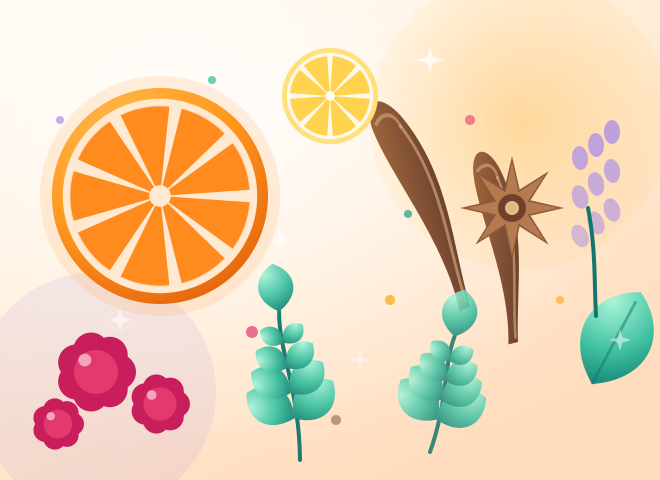
Botanical flavor ingredients arranged on a warm cream background: a sliced orange, Meyer lemon, vanilla pods, star anise, raspberries, lavender and mint sprigs

The flavor garden: every family below starts as a real ingredient on this table.

Family 01 · Bright & short

Citrus zest

A clean, high note that arrives first and leaves before dessert. We build citrus lollipops on a thin hard-crack base so the peel oil stays sharp instead of stewing.

  • Sweetness
  • Tartness
  • Aroma

Tasting notes

  • Grapefruit peel
  • Lime leaf
  • Cold seltzer

Pairs with

  • Sea-salt chocolate
  • Green tea
  • Fizzy water

Kitchen note: finish the batch at 149 °C so the peel oil doesn’t turn bitter.
The Journal

Notes from a very sticky kitchen

Long reads on technique, texture and the odd chemistry of sugar — written by the people who scrub the pots.

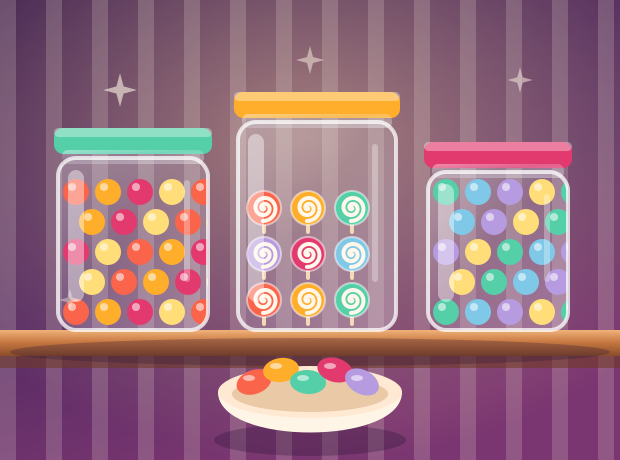
A wooden shelf of glass confectionery jars filled with sunset-coloured fruit drops, miniature swirl lollipops and pastel pastilles, with a bowl of wrapped candies in front

Pantry

The larder problem: how to keep drops from turning cloudy

Humidity is the quiet enemy of hard candy. We tested five jar seals over one very foggy Oregon winter and kept a spreadsheet of every sticky outcome.

Read the field notes
Two barber-striped taffy ropes in raspberry and mint twisting across a pastel pink background scattered with sugar sprinkles

Technique

Pull, fold, repeat: the taffy rope that taught us patience

Two hundred pulls gives that glossy sheen. Sixty gives a crumbly apology.

Follow the process
A stained-glass style arched window made of candy-coloured mosaic tiles with a large swirl lollipop set in the centre

Design

Stained sugar: colour theory inside a hard-candy pane

Light passing through a candy window is a filter, not a paint. We borrow palettes from church glass and fruit stands in equal measure.

See the palette
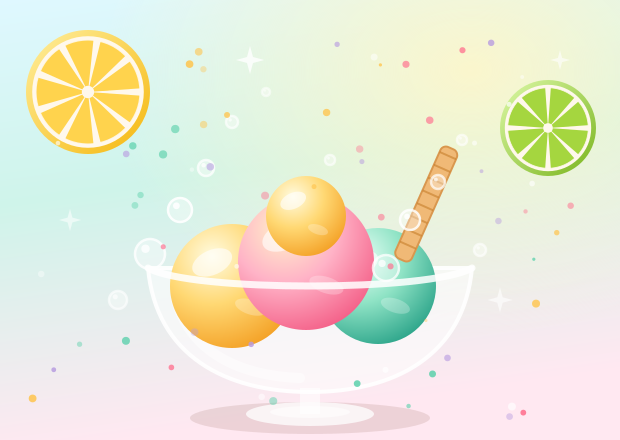
A glass coupe filled with pink, mango and mint sherbet scoops, sour sugar bubbles rising, with lemon and lime slices floating above

Tasting

Sour sherbet, and the fizz that fakes carbonation

Acid plus a whisper of bicarbonate reads as bubbles on the tongue. Our sherbet lollipops use the effect sparingly — a snap, not a science experiment.

Map the acidity
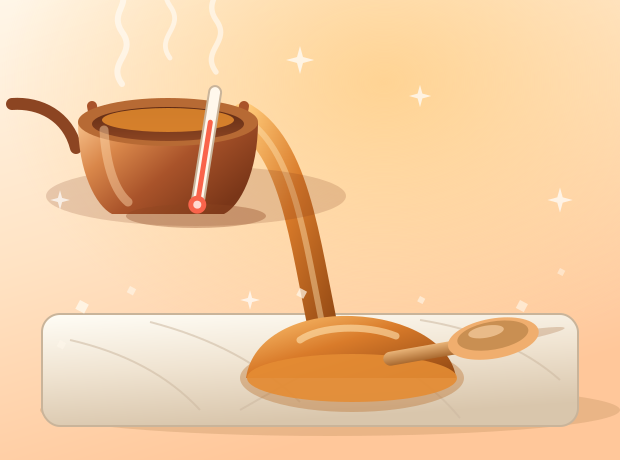
A copper candy pot pouring a ribbon of caramel onto a marble slab, with a sugar thermometer, steam curls, a wooden spoon and scattered sugar crystals
Copper holds heat evenly; marble pulls it out fast. Both matter more than the recipe.

Anatomy of a batch

Four decisions, eighteen lollipops

  1. 01

    Choose the sugar base

    Cane sugar, glucose and a little water. Glucose is the brake pedal — it keeps the candy from crystallising mid-pour.

  2. 02

    Cook to a texture, not a time

    Temperature tells you what the sugar will feel like cooled. The clock only tells you how nervous to be.

  3. 03

    Flavour away from the flame

    Essential oils and acids burn. We stir them in at the last moment, off heat, and accept the extra stirring arm.

  4. 04

    Pull, twist, rest

    Aerating the candy is what makes it glossy rather than glassy. Then it rests until it stops being a hazard.

Interactive · Sugar Craft

The temperature & texture switcher

Seven stages of cooked sugar, from a lazy syrup thread to a dark caramel. Choose a stage to see the texture, what it is used for, and the one thing we always get wrong the first time.

Candy stage 115 °C

Stage 01 of 07 · Syrup

Thread stage

115 °C · 239 °F

A thin syrup that falls from the spoon in a single delicate thread. Nothing you would call candy yet — this is the stage for glazes, syrups and the base of a fruit lollipop before it grows up.

Texture
Syrupy, slippery, barely thickened
Used for
Glazes, sorbet syrups, candied peel
Kitchen trap
Judging by colour instead of a thermometer — clear syrup lies.

All temperatures are sea-level equivalents. In Bend we subtract roughly two degrees for altitude.

Field notes

Three things we learned the hard way

A close-up composition of translucent sugar crystals in mint, lilac and blue facets glowing against a deep plum background

Texture

Crystals are either the point or the problem

In a soft candy you want sugar crystals tiny and even. In a hard candy you want none at all. The same molecule, two completely different jobs — and one stray grain of sugar on a spoon can ruin either.

Botanical flavor ingredients: orange and lemon slices, vanilla pods, star anise, raspberries, lavender and mint on a cream table

Flavor

Aroma does the heavy lifting

Candy has almost no texture to hide behind, so smell carries the whole story. That is why we grate citrus zest at the very last minute and why a lollipop with vanilla smells sweeter than it tastes.

A glass coupe of pink, mango and mint sherbet scoops with sour sugar bubbles and citrus slices

Sensation

Sour is a feeling, not a flavor

Acid triggers a nerve response that reads as fizz and brightness. Push it too far and every fruit note vanishes behind the sting — which is exactly why our sherbet recipe stops at the first snap.

Interactive · Pairing roulette

Not sure what to make next?

Give the wheel a spin. It draws one lollipop, one companion flavour and one very specific occasion from our working notebook. Nothing is saved and nothing is sold — it is a kitchen game, not a cart.

Every spin is a suggestion for the workbench, never a product listing.

This week’s draw

Mango-chili swirl lollipop

paired with

toasted coconut flakes

for a long, slow walk home in the rain

Candy curiosities

Questions we get at the counter

Hard candy is hygroscopic: it pulls moisture out of the air and slowly softens. The flavour oils also migrate outward, so the first bites get louder and the centre gets quieter. A well-sealed jar slows this to a crawl; an open bowl speeds it up considerably.

Contrast and temperature. Two colours of the same value turn to mush; one bright against one deep reads cleanly. We also keep the second colour hotter so it stretches rather than smears, then pull the whole mass only twice — every extra fold dulls the line.

Not at all. A leaf, a zest or an infusion brings water, fibre and bitter compounds along with the aroma; a distilled oil brings only the loud top notes. We use both, but we taste each one in the exact amount the batch will carry before scaling up.

No, but you need something that holds heat calmly. A heavy baking sheet lined with parchment works for small batches, provided it is completely dry. Marble is simply the most forgiving surface we have found for pouring caramel without it seizing.

“A good lollipop should feel like a rumour of a fruit — bright, brief, and impossible to fully explain.”